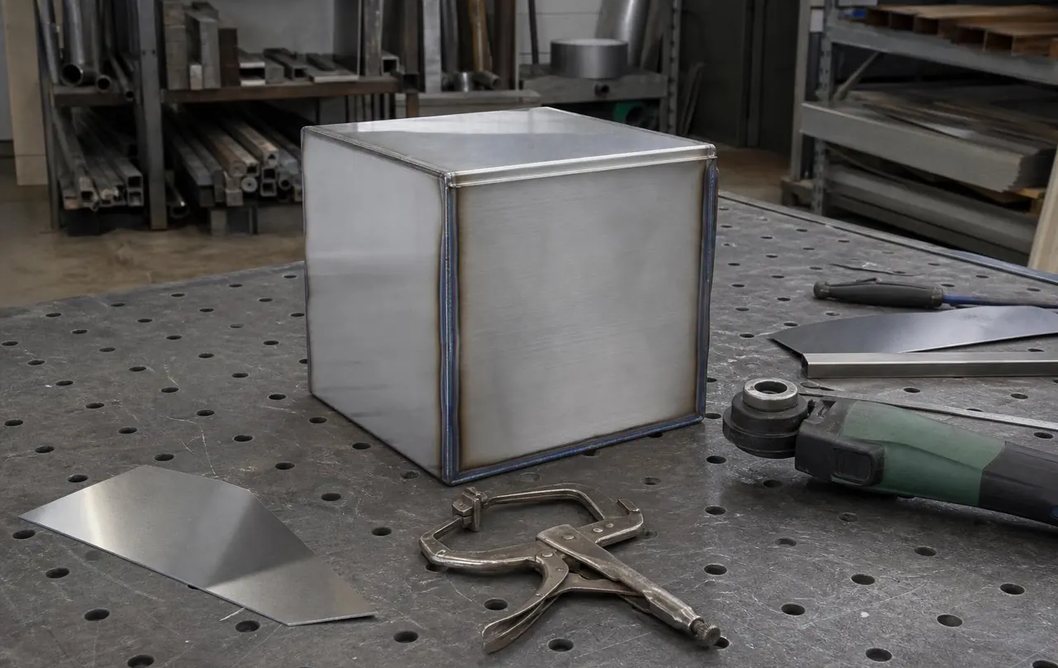
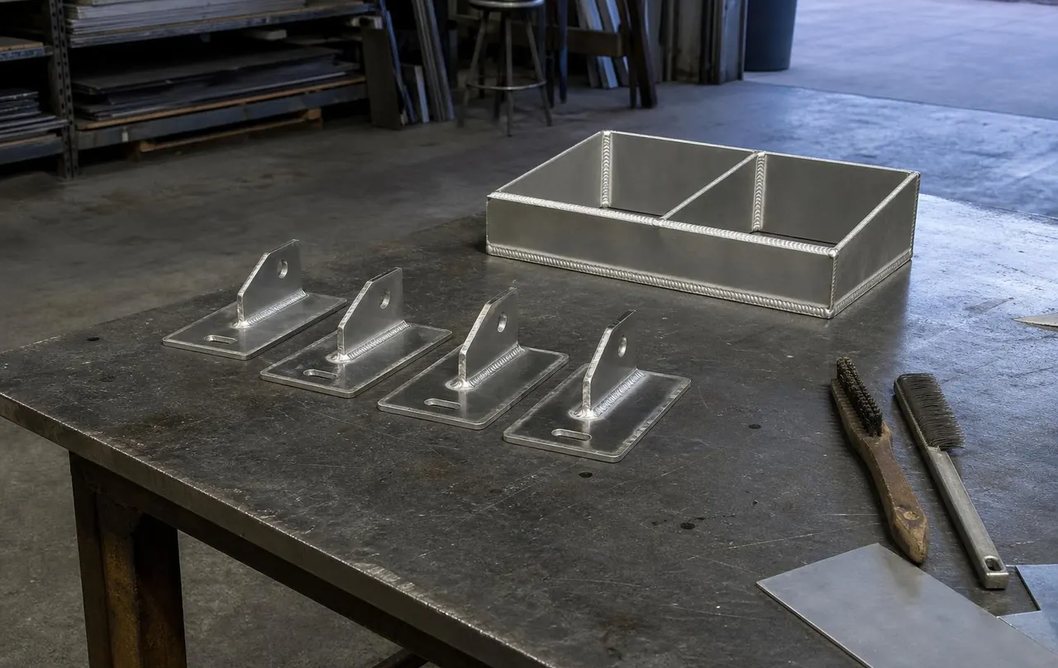
Slow, controlled welds for thin steel, aluminum and stainless, for parts where the look of the seam matters as much as the fit.
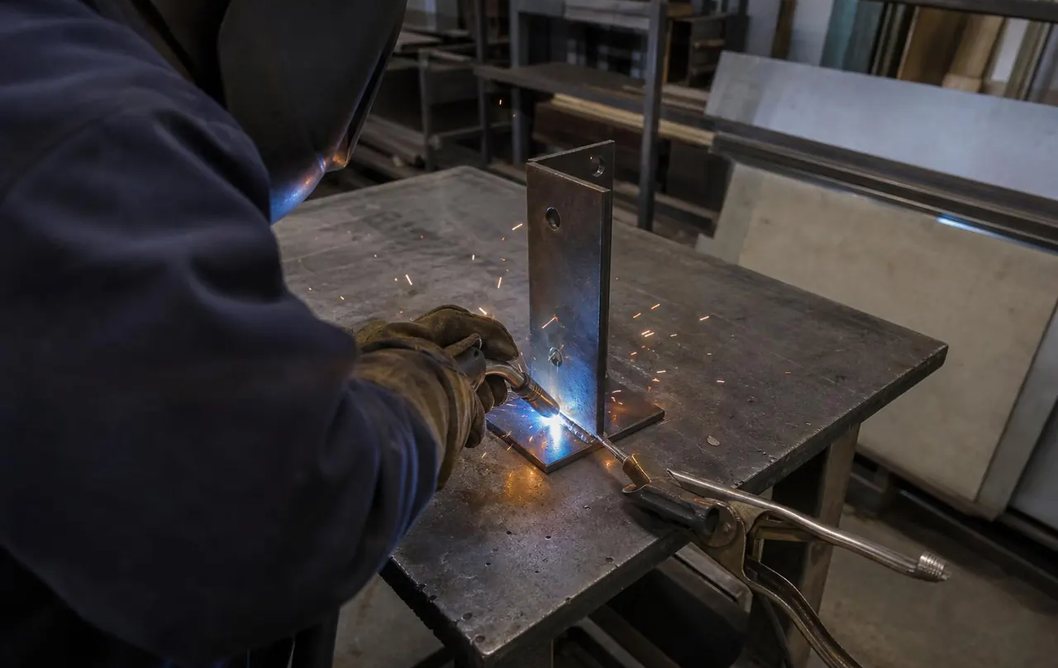
TIG welding uses a fine tungsten electrode to make the arc and a separate filler rod fed by hand. The welder controls heat with a foot pedal or torch switch, so the pool can be kept small and steady. That control is why TIG is our choice for thin material, tight corners and welds on parts people will handle and look at.
It is a slower process than MIG, and we say so openly. The tradeoff is less heat spread into the part, little to no spatter and a narrow, even bead that often needs very little finishing. On many jobs we use both: MIG for the long hidden seams and TIG for the visible corners on the same assembly.
Parts that call for TIG
Designers and product teams often send us parts where the weld is part of the look: a stainless corner on a cabinet, an aluminum bracket that sits on a finished product or a small tube frame with exposed joints. Manufacturers send us the opposite case too, thin parts where too much heat would warp the flat faces. In both cases the aim is the same: put just enough heat into the joint to fuse it well and no more.
How we run it
The same four stages every time, adjusted to the part in front of us.
1
Review and choose filler
We confirm the base metal and thickness and pick the filler rod and tungsten for it.
2
Clean to bright metal
Oil, paint, scale and oxide come off at the joint. TIG shows every bit of dirt.
3
Fit, tack and weld
Tight fit-up, small tacks, then the welds in an order that keeps the part flat and square.
4
Finish as agreed
Left as welded, brushed or blended, depending on what the drawing or your note calls for.
What to include with your request
The form takes a short description. These details help us reply with useful questions or a written quote. Drawings and photos can come later by email.
The base metal and its thickness
Which welds are visible on the finished product
The finish you want: as welded, brushed or ground flush
Photos or a sample of a seam you liked before, if you have one
TIG welding questions
Answers to what customers ask most about this service.
Is TIG always the better choice?
No. It is the more controlled process, not the right one for every part. For long seams in thicker steel, MIG is often the sensible choice.
Can you TIG weld very small parts?
Yes, within reason. Send a drawing or a sample and we will tell you honestly whether it suits our setup.
Do you remove the tint on stainless?
We can clean or brush the heat tint near the weld when the drawing asks for it. We discuss the finish before quoting.
Can TIG be used for a first article?
Yes. We often weld one part first so you can approve the look and fit before the rest of the run.
Often booked together
Services that commonly share a part or a quote with TIG welding.
Your cookie choice. Necessary cookies make the pages and the contact form work. Analytics and ad cookies are optional and stay off unless you turn them on. You can change your choice at any time. Cookie Policy
Cookie Choices
Here you decide which optional cookies may run. Your setting is saved for 180 days. Browsers that send a Global Privacy Control signal are treated as having rejected optional cookies.
NecessaryRequired
Needed for pages, forms and security, and to remember this choice.
Show which pages people read, so we can improve them. Off by default.
Check whether an ad resulted in a quote request. Stays off unless you switch it on.
Your browser sends a Global Privacy Control signal, so optional cookies stay off.