Wire fed welding for steel and heavier aluminum parts, done at our tables for manufacturers, equipment builders and product teams.
MIG welding feeds a solid wire through the gun while shielding gas protects the pool. The arc runs steadily and the wire keeps coming, so it is the process we use for longer seams, thicker sections and parts that need to come out the same way many times over. Most of the steel work that comes through our door starts here.
We set the machine to the part rather than to a habit. A thin bracket and a thick base plate need very different settings, and the same joint can look quite different depending on travel speed, wire speed and the angle of the gun. Before a job goes on the table we run a scrap piece of the same material and thickness and look at the bead and the back side before we touch the real part.
Where MIG earns its place
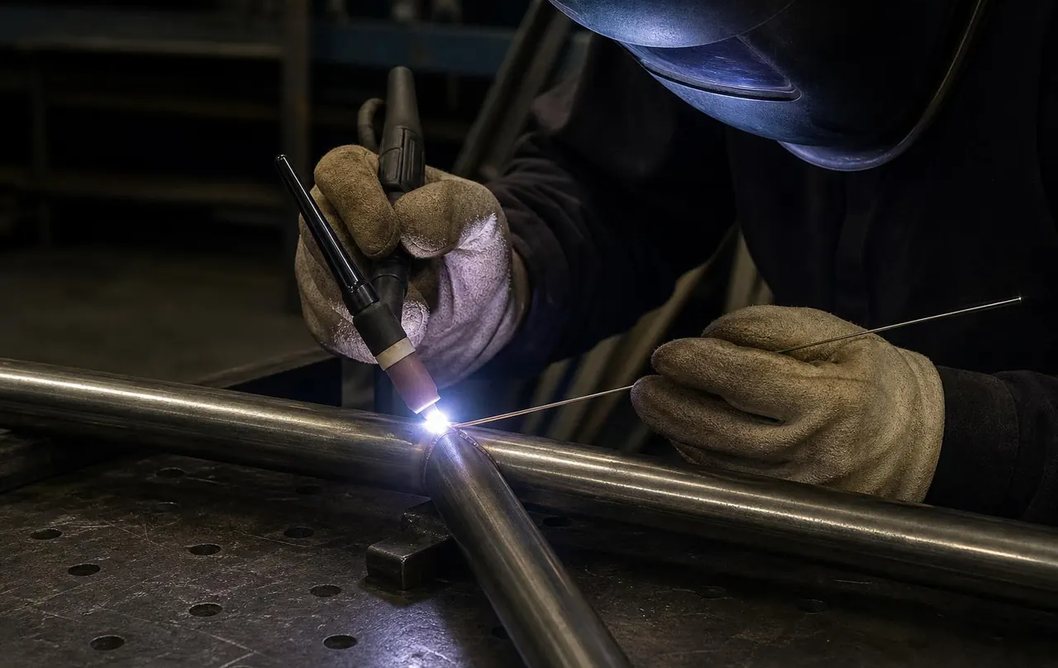
When a part has long fillet welds, several joints of the same size or a material thickness that would take a long time with TIG, MIG keeps the work moving without giving up control. It also handles parts that will be painted or powder coated later, where a clean, sound weld matters more than a mirror ripple. For thin or highly visible joints we may switch to TIG on the same part, and we tell you when we plan to do that.
How we run it
The same four stages every time, adjusted to the part in front of us.
1
Drawing or sample review
We look at the drawing, sketch or sample and confirm the material, the joints and how the part is used.
2
Cut and fit-up
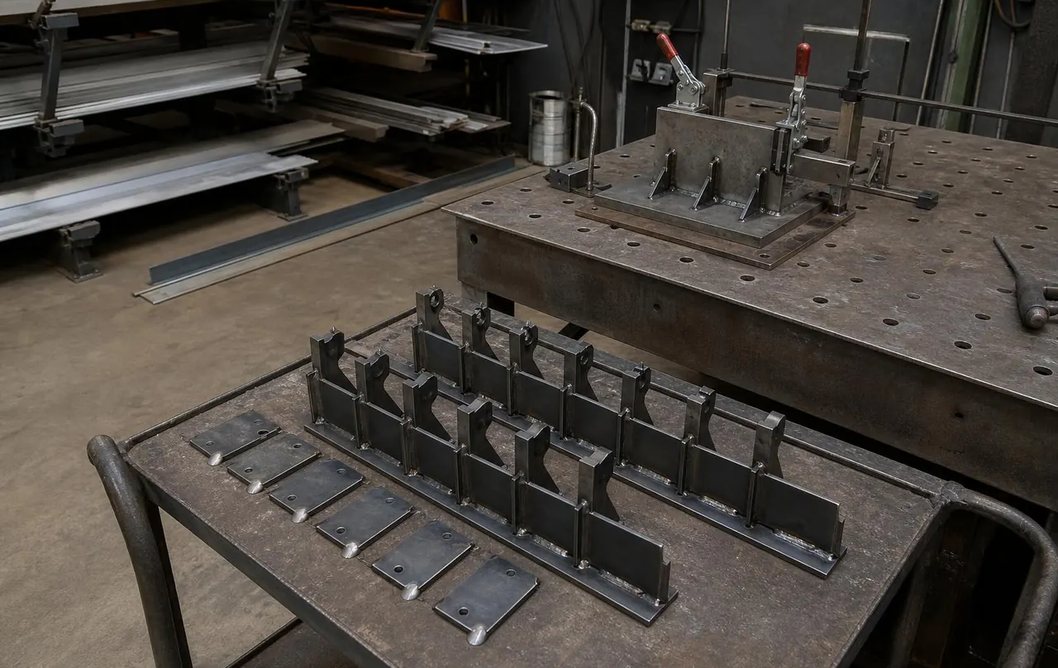
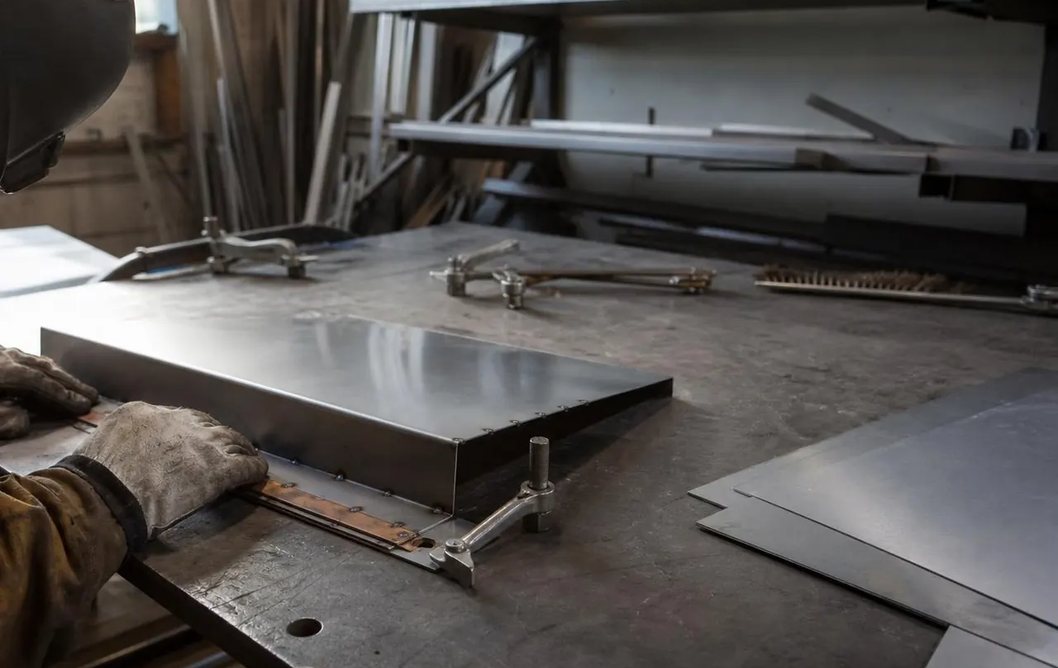
Parts are cut, edges cleaned back to bright metal and the assembly clamped square on the table.
3
Tack, check, weld
We tack, check the fit against the drawing, then weld in a sequence that keeps distortion down.
4
Clean and hand over
Spatter is removed, sharp edges are broken and the part is ready for paint, coating or assembly.
What to include with your request
The form takes a short description. These details help us reply with useful questions or a written quote. Drawings and photos can come later by email.
A drawing with dimensions, or a sample part we can measure
The steel grade or thickness if you know it
Which faces are seen and which are hidden
Whether the part will be painted, coated or left bare
MIG welding questions
Answers to what customers ask most about this service.
Do you use MIG for thin sheet?
Sometimes, with small wire and careful settings. For very thin or highly visible sheet we usually choose TIG, and we explain the choice in the quote.
Can you match an existing part?
Yes. Bring or send the part and we will measure it, review it with you and quote a match based on it.
Will there be spatter on the part?
A little is normal with MIG. We clean it off before the part leaves, and we can grind welds flush where the drawing asks for it.
Can you weld parts we cut in house?
Yes. Many customers cut or bend their own blanks and send them to us for fit-up and welding only.
Often booked together
Services that commonly share a part or a quote with MIG welding.
Your cookie choice. Necessary cookies make the pages and the contact form work. Analytics and ad cookies are optional and stay off unless you turn them on. You can change your choice at any time. Cookie Policy
Cookie Choices
Here you decide which optional cookies may run. Your setting is saved for 180 days. Browsers that send a Global Privacy Control signal are treated as having rejected optional cookies.
NecessaryRequired
Needed for pages, forms and security, and to remember this choice.
Show which pages people read, so we can improve them. Off by default.
Check whether an ad resulted in a quote request. Stays off unless you switch it on.
Your browser sends a Global Privacy Control signal, so optional cookies stay off.