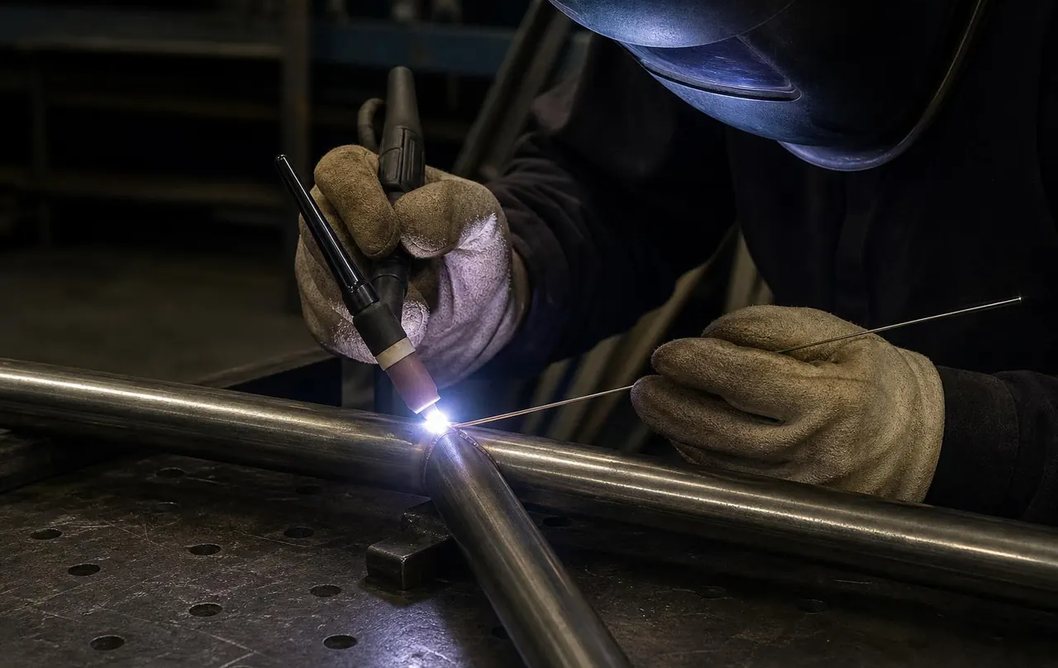
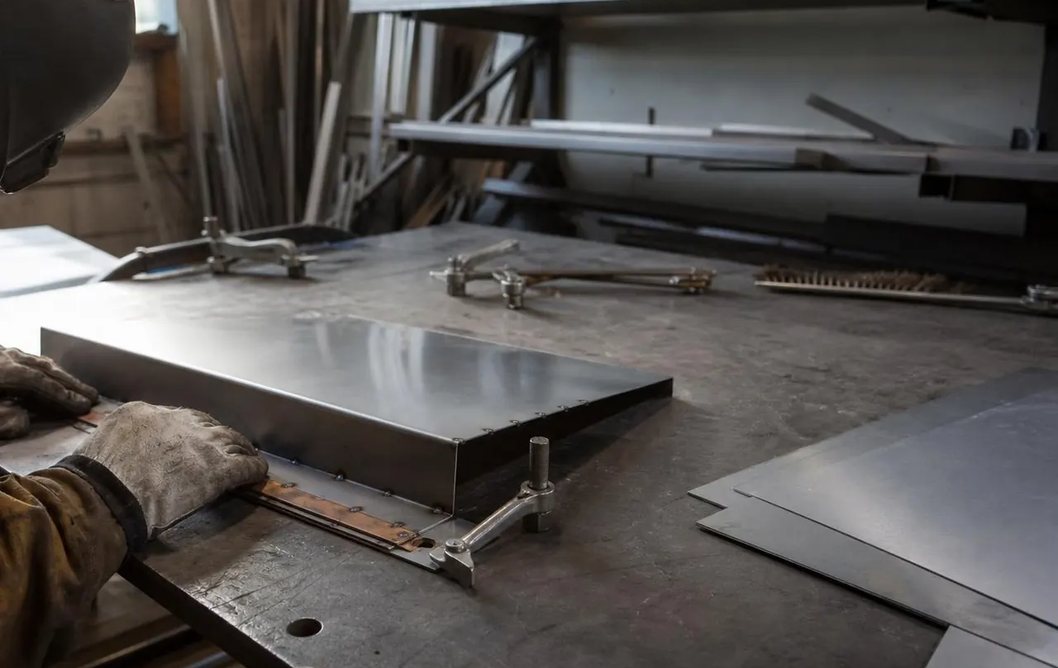
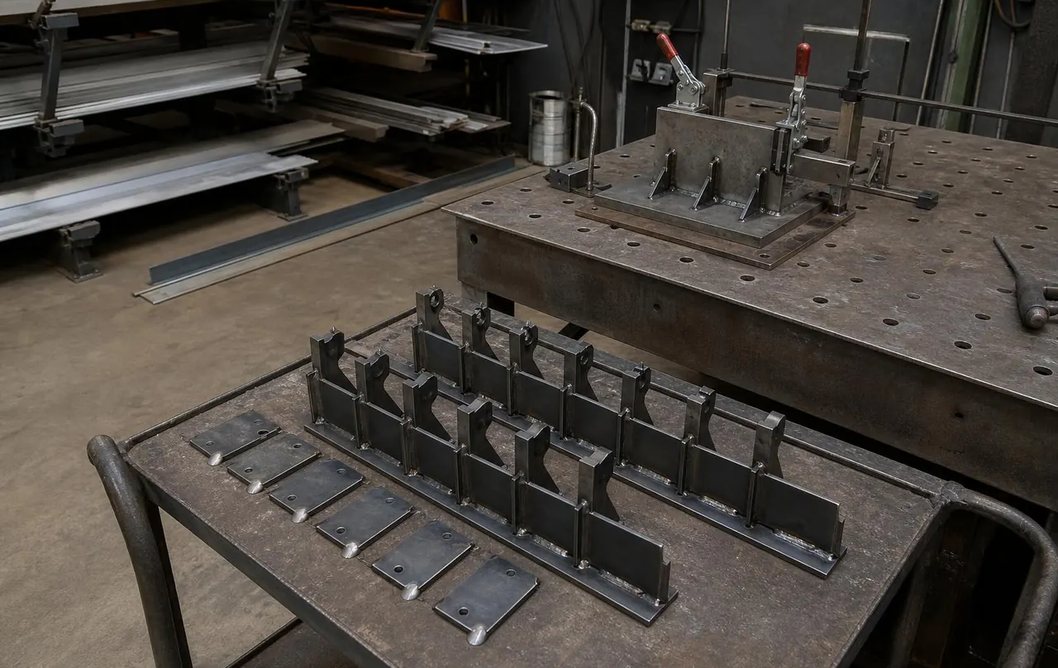
Aluminum welding for brackets, housings, covers and small frames, on sheet and plate, with careful cleaning and heat control.
Aluminum behaves differently from steel. It moves heat away from the joint quickly, it carries a tough oxide layer that melts at a much higher temperature than the metal under it, and it gives very little warning before it slumps. Good aluminum work comes from preparation and patience more than from any single machine setting.
We keep aluminum tools separate from steel tools, brush the oxide off right before welding and wipe the joint clean. Thin sheet and visible seams are usually welded with TIG. Heavier plate and long seams can be welded with MIG using a dedicated setup. We choose per part and write the choice into the quote so there are no surprises.
What we see most often
Typical aluminum work is light and precise: an enclosure for a control unit, a set of mounting brackets for a product line, a cover that has to stay flat, or a frame that will be anodized or painted later. If the finished part will be anodized, tell us early. The weld area can show a slightly different shade after anodizing, and we plan the filler and the finish with that in mind.
How we run it
The same four stages every time, adjusted to the part in front of us.
1
Confirm the alloy
We ask for the alloy or temper if you know it, since it affects filler choice and the finish.
2
Clean and remove oxide
Degrease, then brush the joint with a clean stainless brush used only for aluminum.
3
Fit and weld with control
Tight fit-up, heat built up gradually, and welds sequenced so thin faces stay flat.
4
Finish and protect
Brushed or blended as agreed, then packed so the faces stay clean on the way out.
What to include with your request
The form takes a short description. These details help us reply with useful questions or a written quote. Drawings and photos can come later by email.
The alloy and temper, if known
Sheet or plate thickness
Whether the part will be anodized, painted or left bare
Which faces must stay flat and clean of marks
Aluminum welding questions
Answers to what customers ask most about this service.
Can you weld cast aluminum?
Sometimes. Cast parts vary a lot, so we look at the part first and tell you plainly what we think before quoting.
Why does aluminum warp so easily?
It expands more than steel when heated. Clamping, tack order and short welds in sequence help keep the shape.
Will the weld color match after anodizing?
Not always exactly. We plan the filler with you and can suggest placing visible welds where the shade matters less.
Do you weld aluminum to steel?
Not directly. If a part needs both, we look at fasteners or another joining method and talk it through with you.
Often booked together
Services that commonly share a part or a quote with aluminum welding.
Your cookie choice. Necessary cookies make the pages and the contact form work. Analytics and ad cookies are optional and stay off unless you turn them on. You can change your choice at any time. Cookie Policy
Cookie Choices
Here you decide which optional cookies may run. Your setting is saved for 180 days. Browsers that send a Global Privacy Control signal are treated as having rejected optional cookies.
NecessaryRequired
Needed for pages, forms and security, and to remember this choice.
Show which pages people read, so we can improve them. Off by default.
Check whether an ad resulted in a quote request. Stays off unless you switch it on.
Your browser sends a Global Privacy Control signal, so optional cookies stay off.