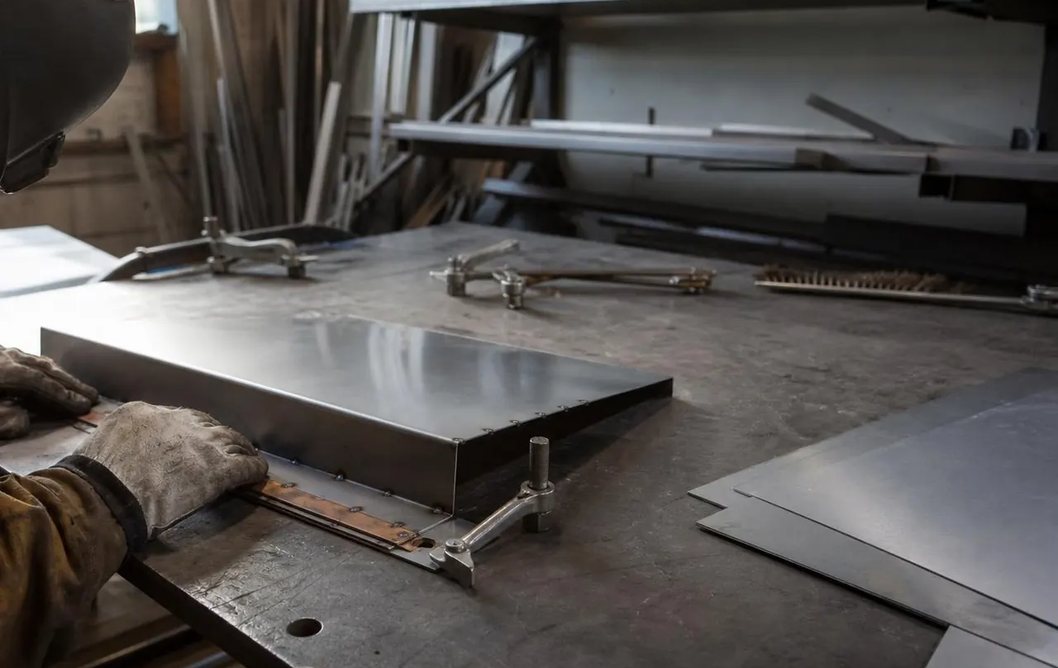
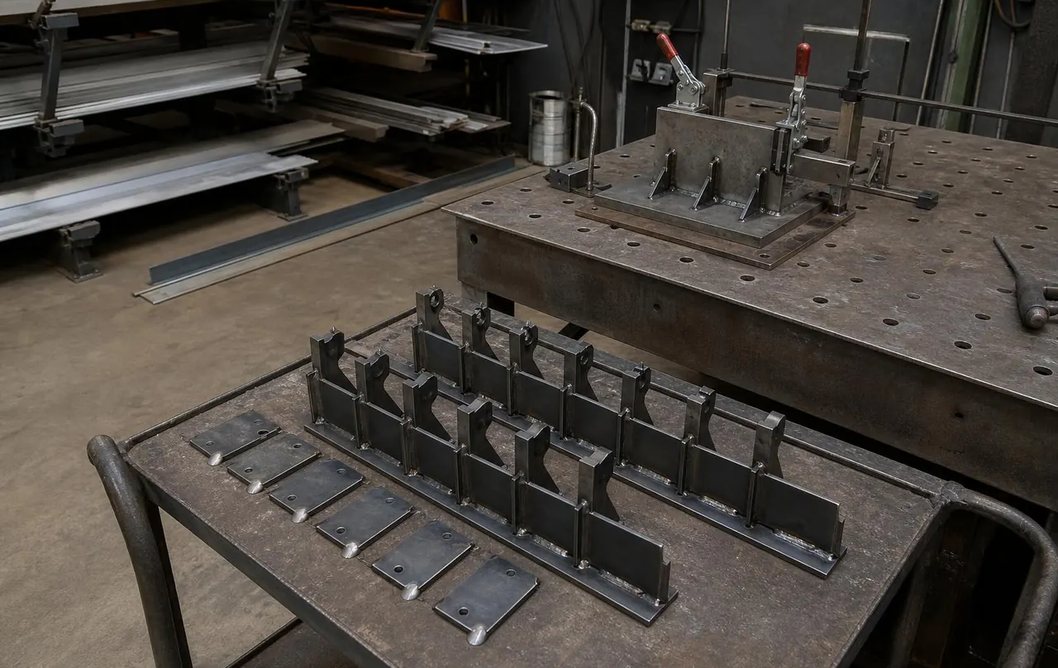
In our shopEvery part is fitted, welded and finished at our own tables.
Drawing firstWe review your drawing or sample before we quote.
Quote in writingScope, process and finish written down before work.
First articleOn runs, one part comes first for your approval.
Two processes, three metals, one careful shop
Most welded parts look simple once they are finished. Getting there means choosing how heat goes into the joint, how the part is held while it cools and how the seam should look when it reaches your line or your customer. We are a small welding shop on the west side of Salt Lake County, and that choice is the center of our work.
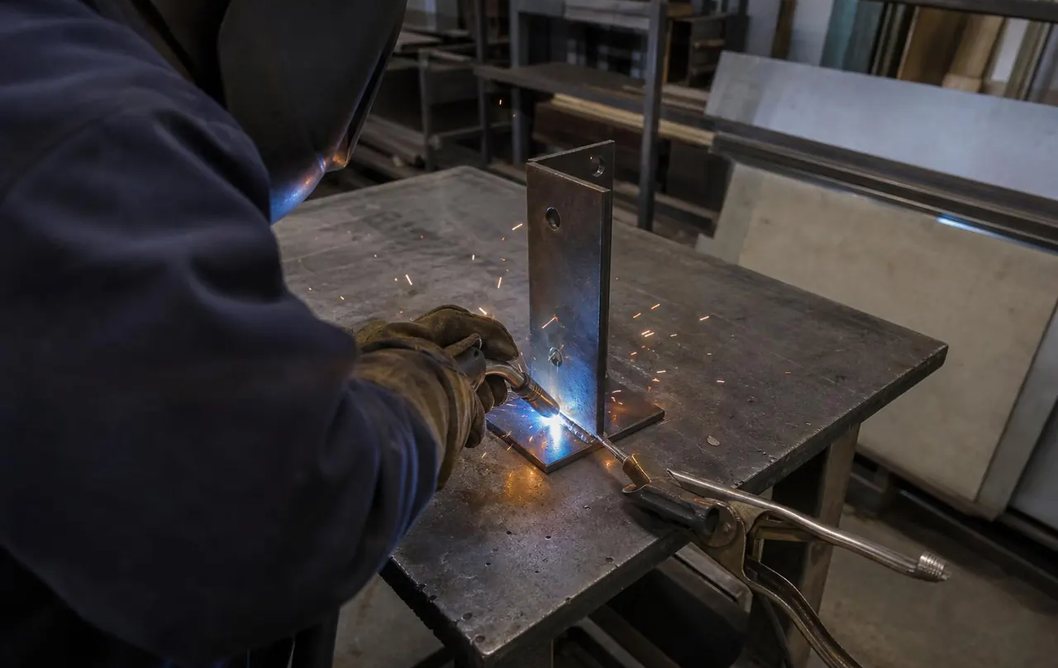
We weld with MIG and TIG on mild steel, aluminum and stainless, for businesses that need brackets, guards, covers, enclosures, small frames and short runs of matching parts. Every request starts with your drawing, sketch or sample, and every quote is written down before work begins, with the process and finish spelled out.
Pick two. Watch them line up.
Choose a process and material on each side. The table rearranges to show where each one fits, how the bead looks and when we reach for it.
vs
Comparison of MIG on mild steel and TIG on aluminum
MIG on mild steel
TIG on aluminum
Parts it suits
Brackets, bases, guards, carts and equipment frames in plate and heavier sheet
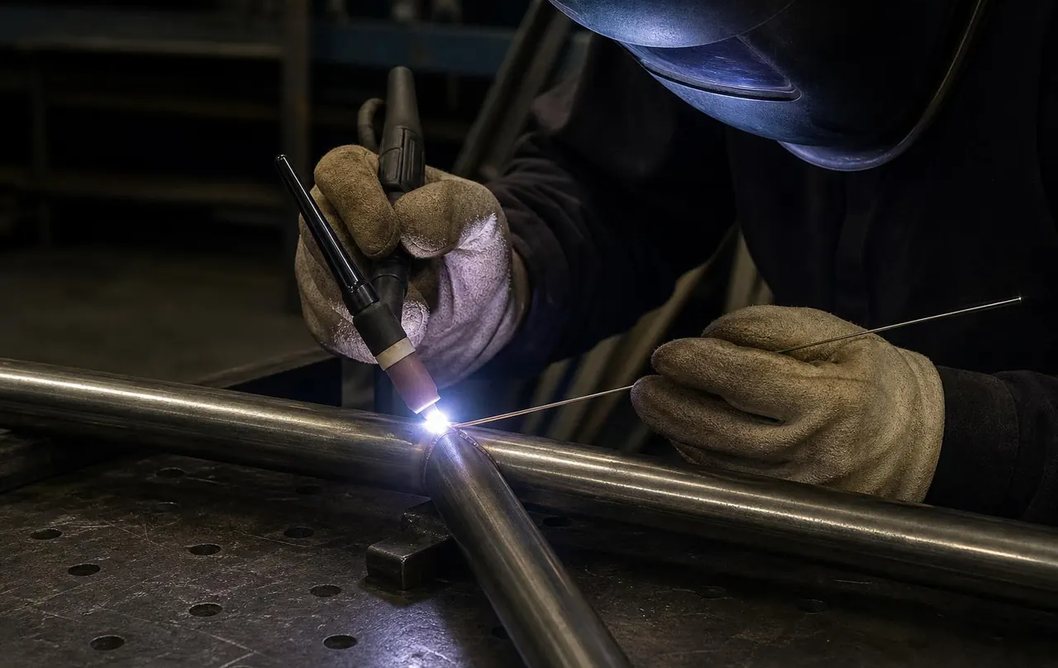
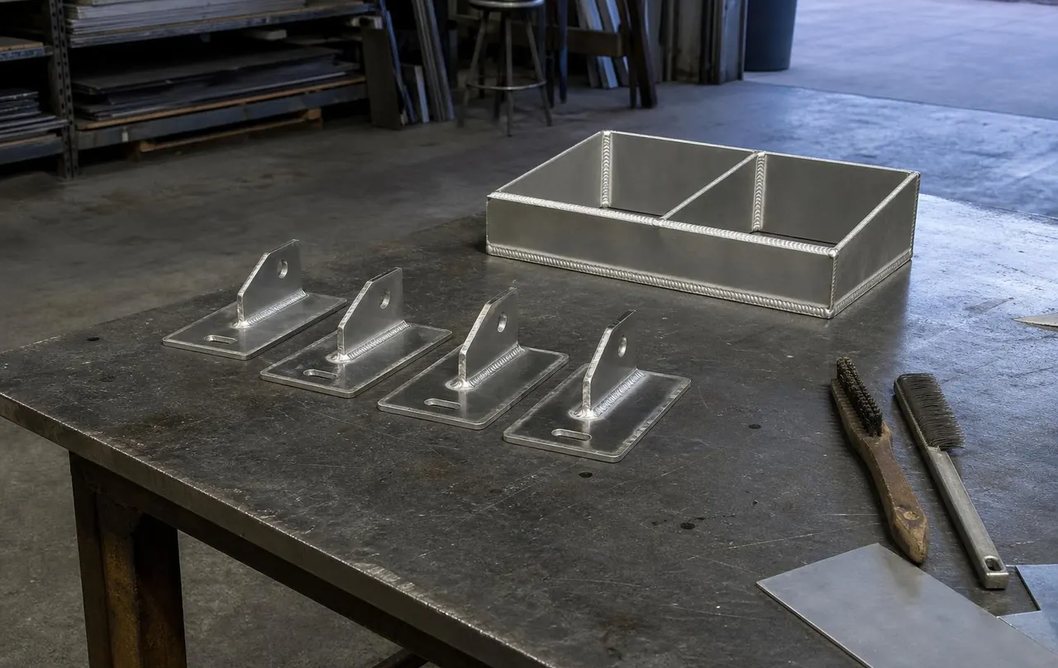
Thin sheet, small housings, covers, tabs and parts that will be seen
How the bead looks
A fuller, rounded bead with a little spatter we clean off
A fine stacked ripple with a clean frosted edge
Pace at the table
Quick
Slow
Heat into the part
Moderate
Moderate, closely controlled
Prep it asks for
Mill scale ground back at the joint, clean fit-up, tight clamping
Fresh oxide removal right before welding, clean filler, a tidy tight fit
When we reach for it
Longer seams, thicker steel and repeat parts where steady output matters
Thin aluminum, cosmetic seams and parts that cannot take extra heat
We work with businesses, from a single replacement part to repeat runs. A few of the teams we set up the shop around:
Manufacturers
Brackets, guards and sub parts welded to your drawings when your own team is busy or the job needs TIG on thin material.
Equipment builders
Bases, frames, covers and enclosures for the machines you build, in the material your design calls for.
Product designers and start-ups
Prototypes and first small runs, with honest notes on how a part could be easier to weld.
Maintenance teams and distributors
Matched replacement guards, brackets and covers from a sample, plus rework on non critical welded parts.
How a job moves through the shop
Five steps, the same for a single bracket or a batch. Nothing is cut until the quote is approved.
1
Send
A drawing, sketch, photos or a sample part, with material and quantity.
2
Review
We read the drawing, ask what is unclear and pick the process for each joint.
3
Quote
A written quote with scope, process and finish, before any metal is cut.
4
Weld
Fit-up, tacks, a check against the drawing, then welding in a planned order.
5
Finish
Cleaned, brushed or ground as agreed, counted and packed for pickup.
Why the review comes first
Reading the drawing before quoting lets us spot a joint that is hard to reach, a thin face that may move or a finish that needs extra time. It is easier to settle those questions on paper than at the welding table.
Three metals we weld every week
Each one behaves differently under the arc, so each gets its own tools, prep and settings.
Mild steel
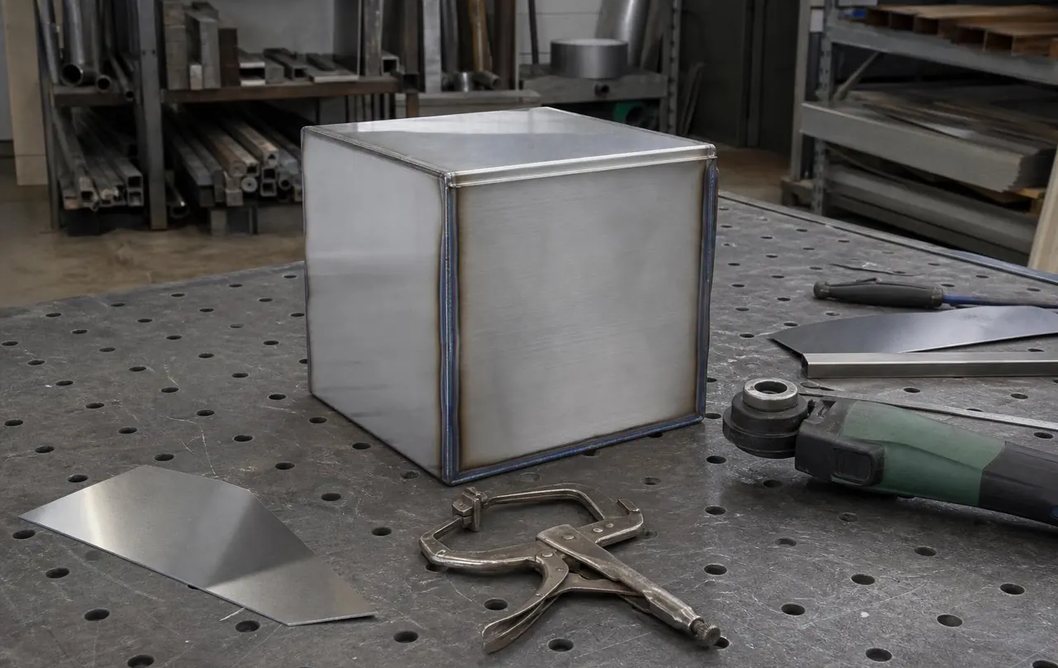
Most of our brackets, bases and guards. Welded with MIG for longer seams and TIG for thin or visible joints. Usually painted or coated after.
Short answers here. For anything specific to your part, send the drawing and ask.
Do you work with individuals or only with businesses?
We work with businesses: manufacturers, equipment builders, product teams, maintenance departments and distributors. Our shop is set up for parts and small runs.
How do parts get to you and back?
You drop parts or samples off at the shop during weekday hours, or have your carrier deliver them. When the job is finished, we let you know and the parts are ready to collect.
What should I send for a quote?
A drawing or sketch with dimensions, the material and thickness, the quantity and the finish you need. Photos of a sample part help a lot. You can email files after sending the form.
Can you tell me whether MIG or TIG suits my part?
Yes. That is part of our review. Our MIG vs TIG page explains the differences, and we note the process for each joint in the quote.
Do you supply the metal?
We can source common sheet, plate, tube and bar for a part, or weld material you supply. We note which in the quote.
Have a drawing on your desk?
Send the drawing, sketch or a few photos with the material and quantity. We review it and reply with questions or a written quote.
Your cookie choice. Necessary cookies make the pages and the contact form work. Analytics and ad cookies are optional and stay off unless you turn them on. You can change your choice at any time. Cookie Policy
Cookie Choices
Here you decide which optional cookies may run. Your setting is saved for 180 days. Browsers that send a Global Privacy Control signal are treated as having rejected optional cookies.
NecessaryRequired
Needed for pages, forms and security, and to remember this choice.
Show which pages people read, so we can improve them. Off by default.
Check whether an ad resulted in a quote request. Stays off unless you switch it on.
Your browser sends a Global Privacy Control signal, so optional cookies stay off.